Dental Implants Abroad · Written in Londrina, Brazil

Is It Worth Getting Dental Implants in Brazil?

Short answer: yes, if your case is large enough to outweigh the trip. International patients typically pay 50% to 70% less in Brazil than in the United States. For one single implant, airfare and hotel can absorb most of that saving. For several implants, a full arch, a full-mouth rehabilitation or a case that needs bone grafting, the saving is usually several times the cost of the entire journey.

This page is written by the team that actually performs the surgery, not by a booking agency. It gives you the numbers, the cases where the trip is not worth it, the questions that separate a serious clinic from a sales pitch, and how long you genuinely need to stay. Nothing here replaces a clinical evaluation of your X-rays.

Last updated: Maxillo Facial Center · Londrina, Brazil Surgery by Dr. Marcos Guskuma, PhD

1. What do dental implants actually cost in Brazil compared to the United States?

Published third-party ranges put a single dental implant in Brazil at roughly US$ 800 to US$ 2,500, against US$ 4,000 to US$ 6,000 in North America. Those are figures published by medical tourism aggregators, collected in September 2026. They are not our quote, and they are useful for one thing only: establishing the order of magnitude of the gap.

Ranges published by medical-tourism aggregators (Bookimed, PlacidWay, Medical Tourism Co., Qunomedical), collected September 2026. Currency conversion at approximately BRL 5.00 to 6.00 per US dollar. These are market ranges for Brazil as a country, not a price list for Maxillo Facial Center.
Treatment Typical United States Typical Brazil (published ranges) Order of saving
Single dental implant (implant + crown) US$ 4,000 to 6,000 US$ 800 to 2,500 50% to 70%
Complex or full-mouth rehabilitation US$ 15,000 to 70,000
depending on complexity
From around US$ 5,000
for a comparable treatment plan
Frequently 3× to 10×
All-on-4 / full arch, porcelain veneers, bone grafting Quoted only after a clinical evaluation. These procedures vary too much between cases for a published number to mean anything. Send your X-rays and you get a written plan with a figure attached.

Where the second row comes from. It is the comparison our own international patient coordinator gives people who write in: a treatment that costs around five thousand dollars at our clinic in Londrina would cost between fifteen and seventy thousand dollars in the United States, depending on complexity. That is the real arbitrage, and it is why comparing two Brazilian clinics over a thousand dollars misses the point entirely. The saving already happened the moment you decided to look at Brazil. What is still open is whether the clinic you pick can deliver a safe, lasting result.

The number that matters is not the implant price. It is the total.

A price per implant is a marketing number. The figure that decides whether this is worth it for you is the total landed cost of solving your problem:

Run that arithmetic honestly and the answer stops being an opinion. For a small case it can come out close to even. For a large one it is not close at all.

2. When the trip pays for itself, and when it does not

Most pages on this subject only argue one side. Here is both, because sending someone across the world for a treatment that does not justify the journey helps nobody.

It is usually worth it if…

  • You need three or more implants, a full arch, or a full-mouth rehabilitation
  • You have been quoted for bone grafting or sinus lift, the procedures where the price gap is widest
  • You were told your case is complex, or that it cannot be solved, and you want a specialist opinion
  • You have a quote at home you cannot afford, and postponing is costing you bone every year
  • You can take 7 to 10 days, and return months later for a shorter second visit
  • You want the procedure under sedation and your local options do not offer it

It is probably not worth it if…

  • You need one single implant and nothing else. Airfare and hotel will eat most of the difference
  • You cannot take at least a week away from work or family
  • Your general health makes surgery far from your usual medical team inadvisable. Your physician decides this, not us
  • You are unwilling or unable to return for the second phase, if your plan requires it
  • You are looking strictly for the cheapest price on earth. We are not it, and the cheapest option is rarely the one you want inside your jaw for thirty years
  • You need emergency treatment this week. Book locally and plan the definitive work afterwards

If you recognised yourself in the right-hand column, that is a useful answer too, and it cost you nothing.

3. Why Brazil, and not Mexico, Turkey or Costa Rica?

Brazil is rarely the first country named in a dental tourism search, and that has more to do with marketing budgets than with dentistry. Brazil is globally recognised as a powerhouse in dentistry, particularly in esthetic and maxillofacial surgery, and the education behind it is unusually deep.

Global Excellence

Ranked among the top countries worldwide for dental research, esthetic treatment and surgical technique. Brazilian protocols and Brazilian-made implant systems are used internationally.

Cost Efficiency

Save between 50% and 70% compared to US and European prices. The gap comes from the exchange rate and the cost of running a practice here, not from cutting corners on materials.

Seamless Travel

Direct connections into São Paulo from most of North America and Europe, then a short domestic flight to Londrina (LDB). No visa hurdles for most passports, and a favourable exchange rate on everything you spend here.

A higher standard of education

In Brazil, dentistry is a five-year, full-time university degree dedicated to oral health from the first day, not a graduate add-on. On top of that, an oral and maxillofacial surgeon completes a hospital residency: years operating alongside medical teams, in the operating room and the emergency department. That is what allows a surgeon to work under general anaesthesia and to manage complications that fall outside the scope of a conventional dentist.

It matters for one practical reason: the cases that go wrong abroad are rarely the simple ones. They are the cases where something unexpected appeared mid-surgery and the team did not have the training to handle it.

4. Is it safe? The real risks, named honestly

The risk in dental tourism is almost never the country. It is the clinic. Brazil has world-class surgeons and it has bad clinics, exactly like the United States, the United Kingdom and everywhere else. What changes when you travel is that your margin for error is smaller, because you cannot walk back in the following week. These are the risks worth taking seriously, and what neutralises each one.

The four failure modes that actually produce bad outcomes in dental treatment abroad.
The real risk What removes it
Rushed treatment compressed into too few days A written treatment plan built before you buy a ticket, with the number of days stated. If a clinic promises a full mouth in three days without seeing your X-rays, that is a sales schedule, not a clinical one.
A complication appearing after you fly home Structured remote follow-up with the surgeon who operated, plus a written report your local dentist can act on. Ask exactly who answers you at 11pm on a Sunday from another continent.
Unknown implant brands with no parts in ten years Internationally distributed systems. We use brands such as Straumann and Neodent, so that a dentist anywhere in the world can service the work later.
A general dentist taking on a surgical case A surgeon with formal specialisation and hospital experience. For grafting, sinus lifts, atrophic jaws and full-arch work, this is the single biggest predictor of the outcome.

On fear, not money. Many people postpone implants for years because they are afraid, and tell themselves it is about cost. Our clinic has sedation infrastructure and a clinical environment built for it: the patient falls asleep, wakes up with the procedure complete, and moves into recovery without carrying the emotional weight of that fear. If fear is what has been stopping you, say so. It changes the plan.

From our international patient team

5. The four questions almost nobody asks before choosing a clinic abroad

Almost every patient reaches us with the same first question: how much does it cost. It is a fair question. It is also the one that changes your result the least. Ask these four of us, and of every other clinic you are considering.

  1. 01

    Does the clinic have sedation infrastructure?

    Many people postpone treatment out of fear, not money. A clinic built for sedation treats that as a clinical variable instead of telling you to be brave.

  2. 02

    Which implant brands do they use?

    An implant stays in your body for decades. The brand defines how predictable the result is and whether you will find replacement parts years from now. A clinic that cannot answer this immediately is telling you something.

  3. 03

    Does the surgeon also work in a hospital setting?

    Complex cases need a team used to complexity. A professional who only operates in a dental office has a limit, and you want to know where that limit is before you begin.

  4. 04

    Is there real postoperative support?

    Or do you fly home with a phone number and a prescription? These four questions separate clinics that deliver results from clinics that deliver promises.

6. Who would actually operate on you

Dr. Marcos Guskuma, PhD, oral and maxillofacial surgeon for dental implants in Londrina, Brazil

Lead Surgeon

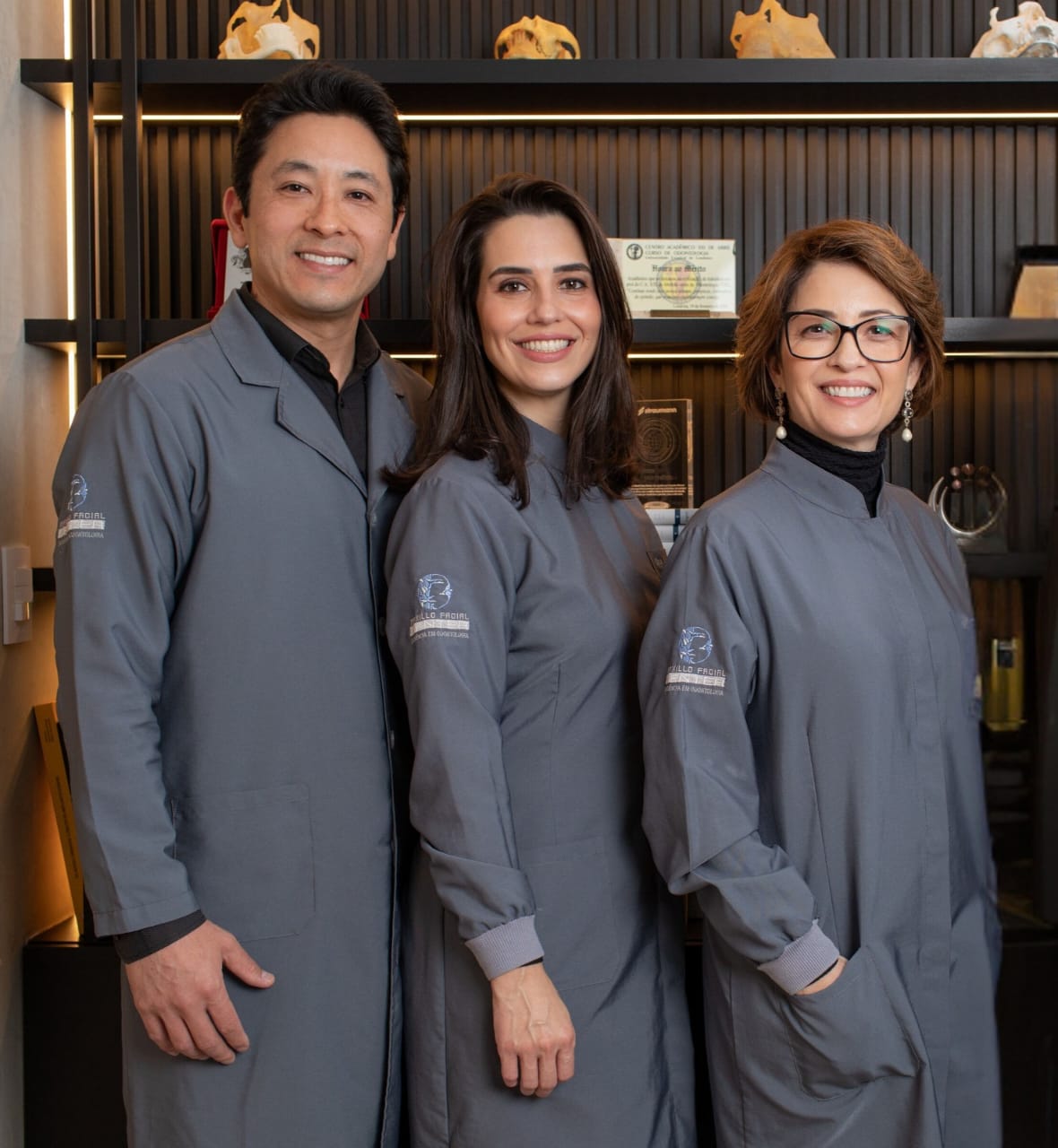
Dr. Marcos Guskuma

PhD & Master in Oral and Maxillofacial Surgery · Post-graduate training in Germany

With over 25 years of experience in dentistry and hospital surgery, Dr. Marcos Guskuma combines academic rigour with high-complexity treatment. He holds both Master's and Doctorate degrees in Oral & Maxillofacial Surgery, and he still operates in a hospital, which is precisely the criterion he tells patients to apply when they are choosing anyone else.

  • Professor of Oral Surgery, Dentistry & Implant Specialization
  • Member of the International Team for Implantology (ITI, Switzerland)
  • International speaker at scientific congresses
  • Head Surgeon at the Cancer Hospital of Londrina (HCL)

In his own words

The four criteria Dr. Guskuma would use to choose a surgeon for someone he loves

"Over 25 years I have learned that most patients do not know what to ask before choosing a professional. And that gap, more often than not, comes at a cost."

1. Training beyond dentistry

Always ask: did the professional complete a hospital residency? Do they still work in a hospital today?

2. Continuous learning

A professional who stopped studying ten years ago is working with ten-year-old knowledge. Do they attend international conferences? Publish? Teach?

3. Transparency about limitations

Be cautious of someone who never says no. The best specialists evaluate each case honestly and tell you exactly what is possible and what is not.

4. Clinical infrastructure

Modern equipment is not luxury. It is precision, it is safety, and it is the difference between a predictable procedure and one full of unnecessary variables.

You are not treated by one person

Implant work is surgery plus prosthetics plus, often, orthodontics. A result that lasts depends on all three being handled by someone who does that specific thing every day.

Dr. Anne Kelly Mantovani

Master in Implantology & Prosthetics

Restores smiles with ceramic veneers, implants and complex rehabilitation. This is the phase that decides what your new teeth actually look like.

  • • Master in Implantology (ILAPEO)
  • • Specialist in Implantology (Uningá) & Prosthetics (EPEO)
  • • Peri-implant Plastic Surgery (ABO)

Dr. Lorenna Guskuma

Orthodontics & Esthetics

Harmonises function and beauty through Invisalign and cosmetic treatment, when the case needs alignment before or after implants.

  • • Specialist in Orthodontics (State University of Londrina, UEL)
  • • DDS from UNESP Araçatuba
  • • Advanced Esthetic Dentistry
The specialist team at Maxillo Facial Center, oral surgery, implants and prosthetics in Londrina, Brazil

7. How long do you actually need to stay in Brazil?

Most implant cases are planned as two visits, not one. An implant has to integrate with the bone before it can carry a permanent crown, and that biological process takes months. No clinic anywhere can shorten it. Anyone promising a complete, definitive full-mouth result in a single week has either seen your X-rays and has a specific reason, or is selling you a flight.

Typical planning ranges. Your actual schedule comes from your treatment plan after your X-rays are reviewed, and can differ in either direction.
Phase Typical time here What happens
First visit: surgical phase About 7 to 10 days Imaging and final planning on arrival, surgery, grafting if required, initial healing checks, suture removal, and a provisional solution so you never walk around without teeth.
Integration at home A few months, at home The implants fuse with the bone. You are back at work and living your life. Follow-up is remote, with the surgeon who operated.
Second visit: prosthetic phase About one week Final impressions, fitting, adjustments and the definitive prosthesis. This is the visit most patients turn into a holiday.
Cases with immediate loading Decided case by case When bone quality and the treatment plan allow, a fixed provisional prosthesis is placed during the first trip, so you leave with a visible result and return later for the definitive one.

Two shorter trips also tend to be better clinically than one compressed one. Healing is not negotiable, and a plan that respects it is the plan that lasts.

8. Where you would go: Londrina, Paraná

Not Rio, not São Paulo. Londrina is a green, safe, mid-sized city in southern Brazil, nicknamed the "Little London". You reach it through São Paulo and then a short domestic flight to Londrina airport (LDB).

This matters more than it sounds. Most of your trip is spent recovering, not in a dental chair. There is no heavy traffic, no noise and no urban rush to make recovery difficult. The climate is mild for most of the year, far from the extreme heat of the coast. There are quality hotels, restaurants with options suited to a post-surgical diet, well-stocked pharmacies, and a health infrastructure that is a national reference. When the mind rests, the body heals faster.

Lake Igapó in Londrina, Brazil, where international dental implant patients recover

Lake Igapó

The serene heart of the city, and where most patients take their first walk after surgery.

Londrina city at night, modern infrastructure for dental tourism in Brazil

Modern Infrastructure

Safety, high-end malls, hospitality. A city that works, without the chaos of a capital.

Brazilian coffee culture in Londrina, Paraná

The Coffee Capital

Historical charm and rural tourism, for the days between appointments.

Health hub excellence in Londrina, Brazil, a national reference in medicine and dentistry

Health Hub Excellence

A national reference in medicine and dentistry, attracting patients from across Brazil for specialised treatment.

You do not organise any of this alone

A partner travel company handles the logistics, so the only thing you have to think about is recovering. Our team accompanies each patient from the airport to the hotel, from the hotel to the clinic, and from the clinic back home.

Airport transfer (LDB)
Hotel partnerships
Bilingual staff, in English
Support before, during and after

9. What the results actually look like

Real patients treated at Maxillo Facial Center in Londrina. Published with consent. Results vary from person to person and depend on your own clinical condition. No image on any website predicts your outcome.

Before Before dental rehabilitation at Maxillo Facial Center, Brazil, patient 1
After After dental rehabilitation at Maxillo Facial Center, Brazil, patient 1
Patient transformation #1
Before Before dental implants and veneers in Londrina, Brazil, patient 2
After After dental implants and veneers in Londrina, Brazil, patient 2
Patient transformation #2
Before Before full mouth rehabilitation in Brazil, patient 3
After After full mouth rehabilitation in Brazil, patient 3
Patient transformation #3
Before Before dental implant treatment in Londrina, Brazil, patient 4
After After dental implant treatment in Londrina, Brazil, patient 4
Patient transformation #4
Before Before esthetic dental treatment in Brazil, patient 5
After After esthetic dental treatment in Brazil, patient 5
Patient transformation #5
Before Before oral rehabilitation with implants in Brazil, patient 6
After After oral rehabilitation with implants in Brazil, patient 6
Patient transformation #6

A patient from the United States

"The treatment I received here is absolutely better than five-star. Better than the best I've ever had."

Ken Fitch is American and has been a patient of Dr. Guskuma and his team for many years. He keeps coming back, which is, in the end, the only testimonial that means anything in dental tourism.

  • Savings of 70% to 80% compared to the same procedures in the United States
  • Precise, careful procedures designed to minimise discomfort and support a faster recovery
  • No rush. Treatment spread over multiple visits, done right, at a human pace

"I've never had an ounce of pain. I come out of here always happy. There's nowhere else I'd go." Ken Fitch, United States

Adalberto · Oral surgery under sedation

"I lost all my fear. I didn't feel any pain."

He arrived terrified, scared even of vaccines, let alone surgery on the roof of his mouth. He was sedated, felt nothing, and woke up with everything already done.

Pedro · Maxillofacial reconstruction

"I thought I would have at least a small scar. I had none."

A violent assault left his jaw fractured. The procedure was done under general anaesthesia. No swelling, no sequelae. This is the level of case the team is built for.

10. Still not sure whether your case is worth the trip?

Everything above is general. Your case is not. Answer 6 questions in about a minute and you get your own answers organised back to you: what your situation actually is, which path usually resolves cases like it, what weighs on the decision, and how a treatment trip would fit into your life. No price, no diagnosis, no sales call. A real evaluation only happens after our team reviews your X-rays, and only if you ask for it.

Which of these best describes your current situation?

And then, over the next 3 days

The part that actually changes your decision

Finishing the quiz puts you on a short series of letters written by the people who would treat you, not marketing emails. This is the material that most clinics never share, because sharing it makes you a harder customer to sell to. That is exactly why we send it. A patient who knows what to ask gets a better result, with us or with anyone else.

Day 1

The four questions almost nobody asks before choosing a clinic

From Bianca, who looks after our international patients from the first message to the day they fly home. Sedation, implant brands, hospital experience, real follow-up, and why arguing over a thousand dollars between two clinics misses the point.

Day 2

The destination you choose is part of the treatment

From Valentin, founder of the travel company that receives our patients. Why the city you recover in affects how you heal. It is something no clinic website tells you, and the reason the cheapest trip is rarely the best one.

Day 3

How to choose the right professional, from someone with 25 years of experience

Dr. Marcos Guskuma writes out the exact criteria he would use to pick a surgeon for someone he loves. Use it on us. Use it on every clinic you are considering.

Start · 6 questions · 1 minute

You can unsubscribe from any email with one click. We do not sell or share your data.

11. Frequently asked questions about dental implants in Brazil

Is it worth getting dental implants in Brazil?

For most patients needing more than one implant, yes. International patients typically pay 50% to 70% less in Brazil than in the United States, and published third-party ranges put a single implant in Brazil at roughly US$ 800 to US$ 2,500 against US$ 4,000 to US$ 6,000 in North America. For one single implant, airfare and accommodation can eat most of that difference. For multiple implants, a full arch, a full-mouth rehabilitation or a case needing bone grafting, the saving is usually several times the cost of the trip.

How much do dental implants cost in Brazil compared to the United States?

Published third-party ranges from medical tourism aggregators put a single dental implant in Brazil at roughly US$ 800 to US$ 2,500, against roughly US$ 4,000 to US$ 6,000 in North America (figures collected September 2026). On larger cases the gap widens: a treatment costing around five thousand dollars at Maxillo Facial Center in Londrina would typically cost between fifteen and seventy thousand dollars in the United States, depending on complexity. Your own figure only exists after a clinical evaluation of your X-rays.

Is dental tourism in Brazil safe?

Brazil is one of the world's reference countries for dentistry and oral surgery. Dentistry here is a full five-year, full-time university degree followed by formal specialisation tracks, and oral and maxillofacial surgeons complete a hospital residency on top of that. The risk in dental tourism is almost never the country. It is choosing a clinic without checking who operates, what infrastructure exists, which implant brands are used and what postoperative support you get after you fly home.

How long do I need to stay in Brazil for dental implants?

Most implant cases are planned as two visits: roughly 7 to 10 days for the surgical phase, then a second visit of about a week after the implants have integrated with the bone, which usually takes a few months. Some cases allow immediate loading, where a provisional fixed prosthesis is placed during the first trip. The exact schedule belongs to your treatment plan, not to a general rule, and is defined after your X-rays are reviewed.

When is it NOT worth travelling to Brazil for dental implants?

It is usually not worth it if you need a single implant and nothing else, if you cannot take at least seven to ten days away, if your general health makes surgery abroad inadvisable, or if you are unwilling to return for a second visit. We say so directly rather than sell a trip that does not pay for itself.

Who performs the surgery at Dental Esthetic Tour?

Dr. Marcos Guskuma, PhD and Master in Oral and Maxillofacial Surgery with post-graduate training in Germany, over 25 years of experience, university professor, member of the International Team for Implantology (ITI, Switzerland) and head surgeon at the Cancer Hospital of Londrina. He is supported by Dr. Anne Kelly Mantovani (Master in Implantology and Prosthetics) and Dr. Lorenna Guskuma (Orthodontics and Esthetics).

Do you treat international patients in English?

Yes. Dental Esthetic Tour exists specifically for international patients. The team supports you in English from the first message to post-procedure follow-up after you are home, and a partner travel company handles airport transfers and accommodation in Londrina.

Can I have dental implants under sedation in Brazil?

Yes. Maxillo Facial Center has sedation infrastructure and a clinical environment built for it. Many patients postpone implants out of fear rather than cost; under sedation the patient falls asleep, wakes up with the procedure complete, and moves into recovery without carrying the emotional weight of that fear.

What should I ask a dental clinic abroad before booking?

Four questions: Does the clinic have sedation infrastructure? Which implant brands do they use, and will replacement parts exist in ten years? Does the surgeon also work in a hospital setting? And is there real postoperative support once you fly home, or just a phone number and a prescription? Ask these of us and of every other clinic you are considering.

Where in Brazil is the clinic, and why Londrina?

Maxillo Facial Center is at Rua Ibiporã, 548, Londrina, Paraná, in southern Brazil, reached through Londrina airport (LDB) via São Paulo. Londrina is a green, safe, mid-sized city with a mild climate, strong health infrastructure and none of the traffic and noise of a capital. That matters, because most of your trip is spent recovering rather than in a dental chair.

Important. This page is general information about dental treatment abroad. It is not a diagnosis, not a treatment plan and not a promise of any specific result. Only a dentist, with a clinical examination and imaging, can tell you what your case needs. Prices shown as ranges are published third-party market figures for the country, not a quotation; any figure for your own treatment is issued in writing after a clinical evaluation. Results vary from patient to patient. Published patient images and videos are used with consent.

Get an answer about your own case, not about the average patient

Six questions, about a minute, and three days of the material most clinics keep to themselves. If the honest answer for your case turns out to be "stay home and treat it locally", you will hear that too.